Sound Masking for Better Sleep: How It Works
Your brain does not wake you because of noise — it wakes you because of changes in noise. A consistent ambient level is easy to sleep through, but a sudden spike — a car horn, a slammed door, a partner's cough — stands out against silence and triggers an arousal response. Sound masking works by raising the ambient baseline so that disturbances no longer contrast sharply enough to wake you.
The Signal-to-Noise Ratio Concept
Sound masking borrows a principle from audio engineering called the signal-to-noise ratio (SNR). When the background noise floor is low (a quiet bedroom), any disturbance (the "signal") stands out dramatically. Raising the noise floor reduces the ratio between the disruption and the background, making the disruption less perceptible. You do not need to drown out the noise completely — just reduce the contrast enough that your sleeping brain categorizes it as unimportant.
Best Masking Sounds by Noise Type
Different disturbances occupy different frequency ranges, and the most effective masking sound matches the frequency profile of your specific problem:
- High-frequency disturbances (voices, TV from neighbors, barking): White noise provides the strongest high-frequency coverage. Rain is a natural alternative with similar spectral coverage.
- Low-frequency disturbances (traffic, bass music, construction): Brown noise with its heavy low-frequency emphasis is most effective. Deep ocean sounds also work well.
- Mixed or unpredictable disturbances (urban environments): Pink noise or layered natural sounds provide balanced coverage across the full spectrum.
- Intermittent sharp sounds (dogs barking, car alarms): Fan noise or steady rain with moderate volume. The key is masking the onset of the sound, which is the component most likely to trigger arousal.
The Layering Technique
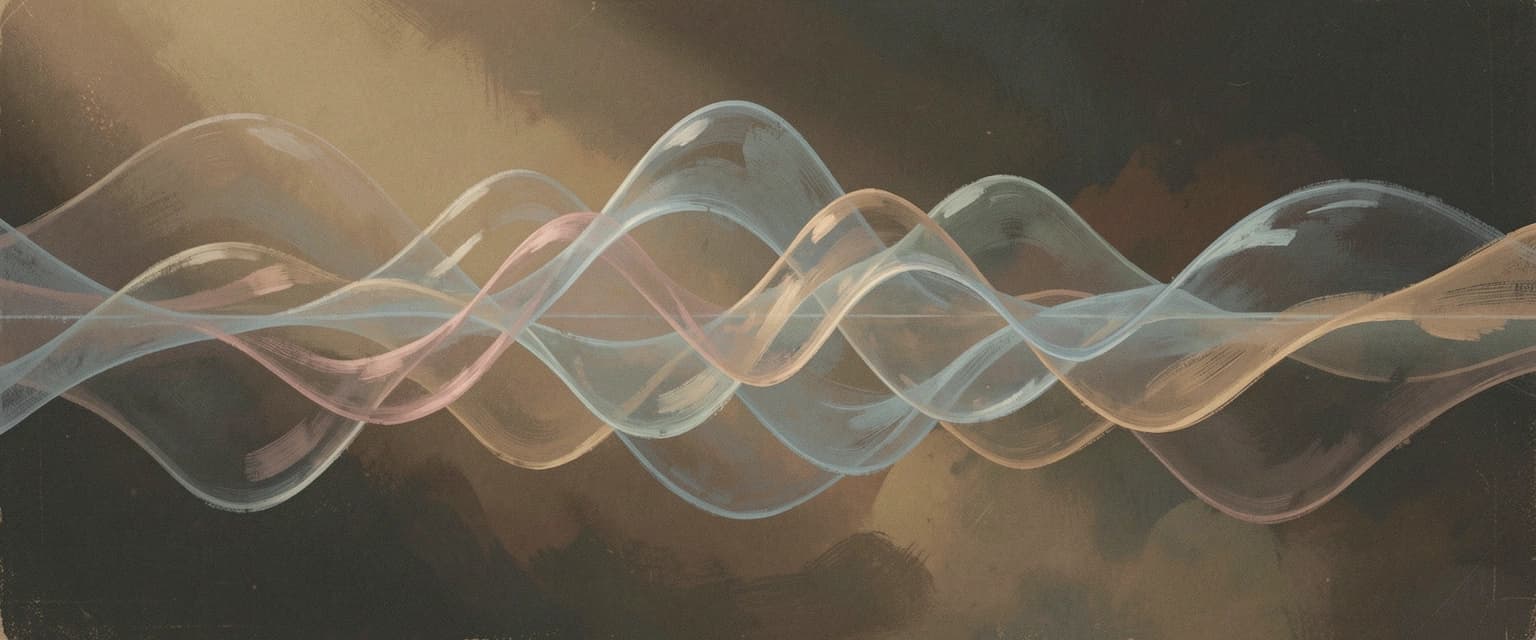
For particularly noisy environments, layering multiple sounds creates broader and more effective masking than any single sound. Combine a base layer (brown noise or deep ocean for low-frequency coverage) with a mid layer (rain or wind for mid-range coverage) and optionally a texture layer (gentle nature sounds for high-frequency coverage and natural variation). Each layer covers a different frequency range, creating comprehensive masking.
Volume Optimization
More is not better with sound masking. The ideal volume is the minimum level at which disturbances no longer wake you. Start at a low volume and gradually increase over several nights until you find the threshold. Excessive volume can disrupt sleep on its own and may cause hearing fatigue over time. The American Academy of Pediatrics recommends staying below 50 decibels for children and most experts suggest 60 to 65 decibels as the upper limit for adults.
Sorat is designed for precisely this kind of customization — its mixer lets you layer any combination of its thousands of sounds at independent volumes, making it easy to build a masking environment perfectly tuned to your specific noise challenges.