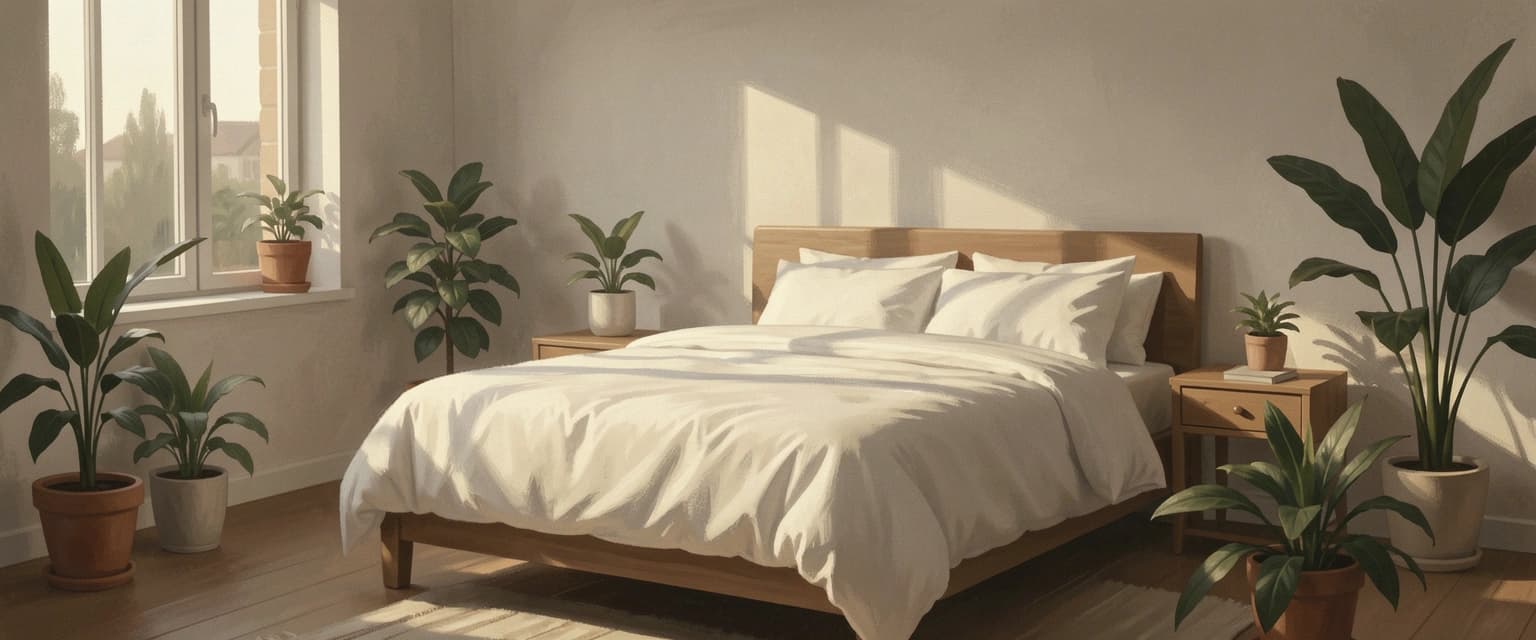
Sleep Hygiene: The Complete Guide to Better Sleep
Sleep hygiene refers to the collection of habits, behaviors, and environmental conditions that promote consistent, high-quality sleep. Mastering these fundamentals can dramatically improve your rest without medication or supplements.
Optimizing Your Sleep Environment
Your bedroom should be engineered for sleep and nothing else. The three critical environmental factors are temperature, darkness, and sound.
- Temperature: Keep your room between 60 and 67 degrees Fahrenheit (15 to 19 Celsius). Your core body temperature needs to drop to initiate sleep, and a cool room supports this process.
- Darkness: Use blackout curtains or a sleep mask. Even small amounts of light — from a streetlamp outside your window or an LED on a charger — can suppress melatonin and fragment sleep.
- Sound: A consistent background sound masks disruptive noises. White noise, pink noise, rain, or fan sounds all work. The key is consistency — sudden changes in sound wake you up, not sound itself.
- Bedding: Choose breathable, moisture-wicking materials. Your sheets and pillows should support comfortable temperature regulation throughout the night.
Daily Habits That Build Better Sleep
Sleep quality is determined long before you lie down. What you do during the day shapes how well you sleep at night.
- Consistent schedule: Go to bed and wake up at the same time every day, including weekends. This is the single most important sleep hygiene practice.
- Morning sunlight: Get bright natural light within the first hour after waking. This resets your circadian clock and establishes a strong wake signal.
- Regular exercise: Moderate aerobic exercise increases deep sleep. Finish vigorous workouts at least two hours before bed.
- Caffeine curfew: Avoid caffeine after 2 PM. Its five-to-six-hour half-life means an afternoon coffee still has significant effects at bedtime.
- Limit alcohol: While alcohol may help you fall asleep faster, it fragments sleep architecture and suppresses REM sleep during the second half of the night.
The Evening Wind-Down
Build a 30 to 60 minute buffer zone between your active day and sleep. Dim the lights, put away screens, and transition to calming activities — reading, gentle stretching, journaling, or listening to sleep sounds. This routine becomes a conditioned sleep cue that your brain learns to associate with imminent rest.
Common Sleep Hygiene Myths
Sleeping in on weekends does not "pay back" sleep debt — it disrupts your circadian rhythm further. Alcohol is not a sleep aid. Watching TV in bed is not relaxing for your sleep system, even if it feels relaxing. And counting sheep has been shown in studies to be less effective than visualization or breathing exercises. Sorat can support your sleep hygiene practice by providing consistent, calming audio as a reliable part of your nightly routine.